Words, Mouths, Moons, Holes, Souls
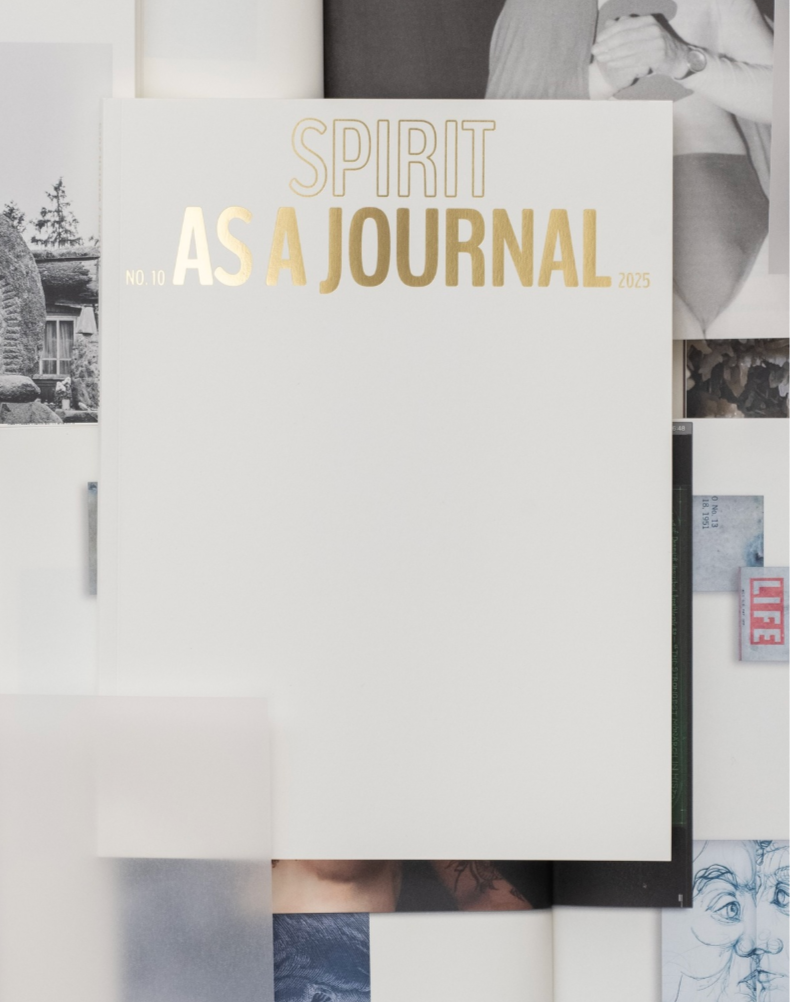
A text by Lucia Pietroiusti for SPIRIT AS A JOURNAL, 2026, ed. Vaiva Grainytė
Full text below ↓
Buy a copy →
Wounds, Mouths, Moons, Holes, Souls
The following fragments weave together a series of intuitions that have grown over time, through very different life experiences, including a decade-long dedication to research in art, ecology and anthropology, and a completely inexpert and secret passion for the worlds and words of the Medieval mystics of Northern Europe and those of Italy, with a particular fondness for their divine erotica.
Lastly, they emerge from my own, entirely intimate, simultaneously carnal and soulful experience of possession in all its shapes – revelations of the most worldly kind –, which itself has conjured landscapes, objects, images, words and forms into existence. These have manifested in a space within or near me, that is not-quite the imagination, not-quite the tangible universe, not-yet the spirit world – somewhere that most resolutely belongs to this planet and is deeply connected to it.
All of these elements, together, point towards how the mystical encounter in Medieval literature, particularly by women, offers an entry point into forms of ecological consciousness that tap into deep planetary truths, and thanks to which we might learn to behave as far better Earth-dwellers, in this all-too-human world. If we extract religious vision away from its institutionalised, reified inflexibility, we may begin to perceive forms of overlap, or even forms of identity and identification, between bodies, intimacies, divinities and the ecosystemic logics that sustain the breath of the world.
It is my further contention that they can do so if, and only when, we collectively begin to pay attention to, and take seriously, the intensity of the erotic drive that we find embedded within. In other words, we – all of us – have all the tools at our literal fingertips and tongue-tips to touch and taste the mysterious and the infinite; the vastness and the workings of the Earth.
Wounds
— ‘God is at scale’ (Elvia Wilk)
God is ineffable, unknowable. Formless, limitless, faceless. Immanent, all-present. God is inside everything. God is desire without body; word without mouth. God is pure creative force, pure light. Or again: God is somethingness emerging from nothingness, a slight stir and a condensation of that nothingness, like the accident of a grain of sand in an oyster. A density that comes from nothing. Or God precedes and makes possible said condensation. God speaks in the tongues of everything that lives or that moves. God holds up the sky. God separates the Earth and the Sky; God ejaculates, and here’s the starry sky. God has always been, yet God is at the beginning.
Whichever shape of the divine one chooses, whether one speaks of a single divinity, or a theatre-full of extravagant and extraordinary figures; whether the divine is utterly outside of the knowable universe, or thickly constitutive of it; whichever way one looks at it, there is something fundamentally unthinkable about its nature, something which escapes the possibility of conscious contemplation. How can we say that God made everything that is, has been, ever will be, or is possible, when there is nothing that rests outside of the possible? In what form can one ever, then, meet God?
While theological traditions the world over have worked and re-worked these questions, the mystical encounter can sometimes bypass them altogether. Whether through sudden, painful and unexpected revelation, or through the careful practice of attending to their visionary capabilities, Medieval mystics meet the body of Christ as an embodied self: an actual, knowable body. Metonymical as Christ’s flesh may be for the essence or existence of God, here is God meeting the mystic exactly where she is.
Somewhere on this Earth, humans find themselves perennially facing a related problem: the hyperobjectual nature of nature itself, and its associated disasters. It is impossible to think of environmental breakdown. Unfathomable to grasp ecosystemic life at scale. Pointless to attempt computational models that would attempt to simulate weather patterns, let alone the behaviour of all things on the planet. We can only do so by reduction, by approximation, and that approximation creates a margin of error in the face of chaos that may as well be called uncertainty. How can we compute the Earth, if our computational machine is located within the Earth, and an infinitesimal part of it? A machine as complex as the world itself, we realise painfully, is the Earth and nothing less, and the reductionist principle in science leaves too much behind, at least when it comes to our dilemma of sensing, calculating, predicting or in some way making sense of ‘the whole thing’. This is a familiar problem. How can we make sense of God when we are ourselves inside God’s creation?
The mystically enfleshed sublime may suggest some avenues to get ourselves out of this particular pickle. We may turn to different practices that, in one way or another, relate to intimacy (alone and with others); practices that recognise that in order to get as far as possible from this fleshy, Earthly, finite body and mind, I must get as close as possible to it. I must know it, know its joys and suffering, find the weave of everything in the jolts of its awakenings. I must bring gratitude and attention – not answers – to places that once only had questions. We don’t need machines to grasp the hyperobject of the planet; we just need to know how to love it, to be fully and intimately part of it.
Not that it’s always this rosy, and in our proto-cognitive capabilities to sense the ‘sweatshop sublime’, a secluded moment cuts a gash and sudden pathway between my standing here and the weaves of intricate pain that hold up the shape of my existence while poisoning the water of another. It’s important, then, that this is not forgotten either: that sometimes the erotics inherent in thinking of the self as a portal into the infinite resolve in sticking salty fingers in a wound and facing the burn.
Mouths
— ‘The fuller our desire, the hungrier our soul.’ (Caroline Walker Bynum)
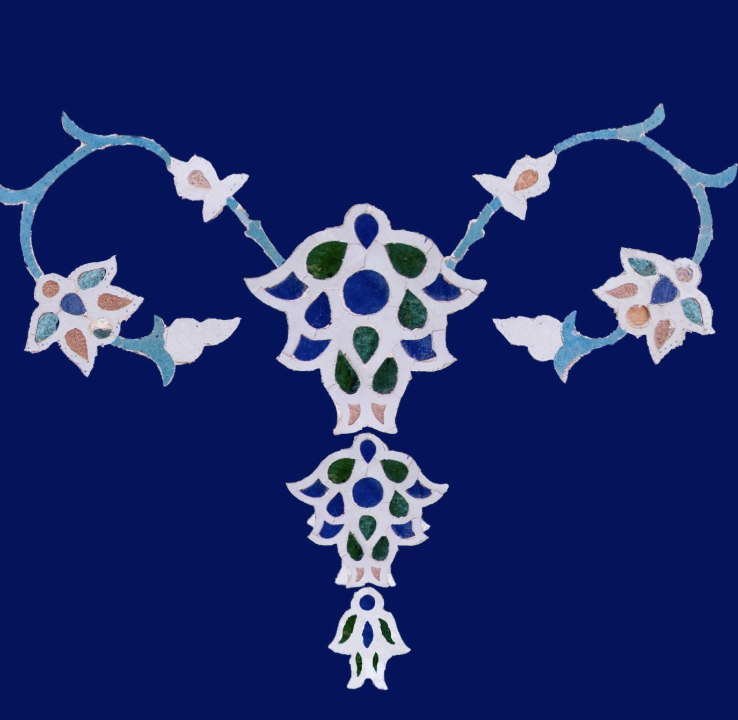
Oyjon Khayrullaeva, The Life-Giver, digital collage, 2025
I must sacrifice my flesh to God so that the harvest may be abundant. God is hungry. God makes me and eats me and wants me alive, or dead – God wants me. But myself, and the beings of this Earth, eat God, too. When God sprouts from the Earth in a yelp of enjoyment, when God feeds the light-eaters so that they may feed us, the God-eaters. When the body of God reveals itself to me and in taking the divine form into me, I taste it, taste it, taste it again. Taste becomes light becomes growl.
Identifying the body of Christ with a mother’s breast for an infant, Catherine of Siena writes to her father:
"He showed me his most sacred side from afar and I cried from the intensity of my longing to put my mouth to the sacred wound… With its great longing my soul entered right into that wound (in his side) and found such sweetness and such knowledge of the Divinity there that if you could ever appreciate it you would marvel that my heart did not break.”
And here, Hadewijch:
“I desired to have full fruition of my Beloved, and to understand and taste him to the full… He came himself to me, took me entirely in his arms… I saw him completely come to nought and so fade and all at once dissolve that I could no longer recognise or perceive him outside me, and I could no longer distinguish him within me. Then it was to me as if we were one without difference.”
In the eroticised mystical encounter, a willing observer may meet, once again, the planet, offering partial comfort to another unsolvable problem: not the infinite or unknowable nature of the whole, this time, but rather the finite nature of each individual thing. It is virtually impossible to be present to one’s own finitude, the finitude of everything and everyone around, unless it is possible to, in turn, digest – profoundly make sense of – the planet’s own metabolic logic. In the closest presence of God, it is the plants in my garden that I see; the ripeness of the fruit awaiting plucking; the air tempered by the aromatics whose leaves rustle in the breeze; the self-gifting that awaits consuming, by me or by my more-than-human co-habitants, whoever gets there first. In the explosion of its colours, its flavours, its odours into the sensible, God is sacrifice sacrificing Itself.
Being consumed is like going home. It is acknowledging mortal forms, including our own, as a temporary configuration of matter which the planet will reorganise through devouring, whether by worm or by wolf. As such, the fundamental metabolic workings of the planetary, a core principle at the root of ecological consciousness, find a peculiarly similar story in the mystical encounter with the divine. In taking God into my mouth, divinity and I become one without bounds, without break. When I die, I fold back into the planet, the pieces that make me get recycled, and I and everything else around me are both eating and being eaten by itself. Let us not forget that, by the same logic, we are all the products of putrefaction.
Again, the aim of this is not to make it pretty. It is worth noting that those places, times and cultures in which the dead are offered their proper role in society, their agency and their place, don’t act quite as hysterically towards the more-than-human world as those that pretend death doesn’t exist. And yet there is a tragic irony in recognising that the latter will happily make good use of death by exporting it to an ‘elsewhere’ out of sight, in the form of toxic clouds, holes in the ground that sink it, materials that – like plastics – defy the workings of the metabolic and terraform the ocean…
Moons, Holes
— ‘Practicing coming to terms with radio silence is part and parcel of a life-in-practice… We are clinging to meet love at a certain distance, while it has moved deeper into us.’ (Áron Birtalan)
God is the beginning of time; God is at the end of all times, the goal of history. God put the stars in the sky, and that’s how living beings can tell time. God dances, and from this dance come the cycles of life and death, creation and destruction. When God is here, it’s daytime; when God is gone, it’s night. Or: summer when here, winter when not. God demands a sacrifice, or there will be no more day and no more night. God is time itself. Or the opposite: time is divine in and of itself. Time is the originating principle of the cosmos. Each day of the year is a God. God’s cosmic egg spins, and in so doing, it separates space and time. Creation took 4.32 billion years; creation took six days.
There is a fundamental connection, in cosmogonic space, between the presence or absence of divinity and the possibility of experiencing the cycles of time. Whether as the creator of fundamental time, or as the force that teaches humans how to live in time, whether as an actor within the flow of time, or entirely identified with it, the interrelation of the divine and the chronological plays a critical role in structuring the metaphysics of a civilisation and its understanding of linearity, causality and cyclicality.
In mystical vision, this rhythm is underscored by an alternation between eternity and fear. In the presence of love and unity, time pauses, transforms or dissolves altogether. Divine love acknowledges historical events but transcends it, as Julian of Norwich reminds the devout, lest we become lost in the drama of Christ’s final days: ‘The Passion was a noble worshipful deed done in a time, but Love was without beginning, is, and shall be without ending’. And here is Angela di Foligno, stopping time when approached by God’s love: ‘I beheld love advancing gently toward me, and I beheld the beginning but not the end. Unto me there seemed only a continuation and eternity thereof, so that I can describe neither likeness nor colour…’ The ecstatic moment halts the chronological flow and reveals divine joy as infinite, and as such, defying teleology.
Yet, in the mystic’s universe, the soul undergoes a frequent and highly jarring emotional see-saw, between the eternity of orgasmic abundance and the subsequent shock of falling back into the flow of time. This fall from grace is experienced through the terrifying thing that happens when God’s love is altogether absent, refusing to gift itself, or silent, refusing to bestow meaning and sense. The crisis cuts deep, and let’s remind ourselves that crisis, from the Ancient Greek, refers to separation. (As I write this, the rhythmic tick-tocks of my clock appear cruelly and terrifyingly distant from one another, each silence a chasm within which to fall.) Nothing terrorises the mystic more than Christ’s sudden departure, in the face of the inexorable nature of time. There is no wait in eternity. In time, there is nothing but.
Yet time, the planet teaches us, moves backwards, forwards, but most of all in circles. Divine workings, both cosmogonic ones and the promised return of Christ-the-lover in mystical union, teach humans about seasonal change, and with it, establish a metaphysics of recursiveness. This, in turn, allows for the establishment of rituals and practices that are held in accordance with those of our more-than-human companions in wild and cultivated gardens alike. If visions of consumption and togetherness reminded us to accept the deep metabolic significance that death bestows upon our individual lives, then the mystic’s terror in silence, followed by ecstasy, followed by silence, and so on forever, invites us to bring patience to the whole process.
That is to say, that it is not only our death that we may fear, but the possibility that the sun may not rise again tomorrow; that life may not sprout again from the ground come spring. So, here, the rhythms, ebbs and flows of divine, erotic desire are none other than those of the seasonal cycles within which we are embedded, and around which we build story, song and ceremony.
‘Dear Lord, I cannot control my longing; I would so dearly like to be with you.
Our Lord said: “I longed for you before the beginning of the world. I long for you and you long for me. Where two burning desires meet, there love is perfect.”’
And here the sting, once again – for there is always a sting: that as atmospheric suffocation pushes climatic cycles and circles to breaking point, from the Gulf Stream to the certainties once afforded by familiar weather, life may eventually choose not to sprout again, when winter is over, after all. And the sun may choose, indeed, not to rise again. The silence of God on devastated land is unequivocal, and at times irrevocable.
Souls
— ‘Being in the world means to garden other species and at the same time, to be the object of the gardening.’ (Emanuele Coccia)
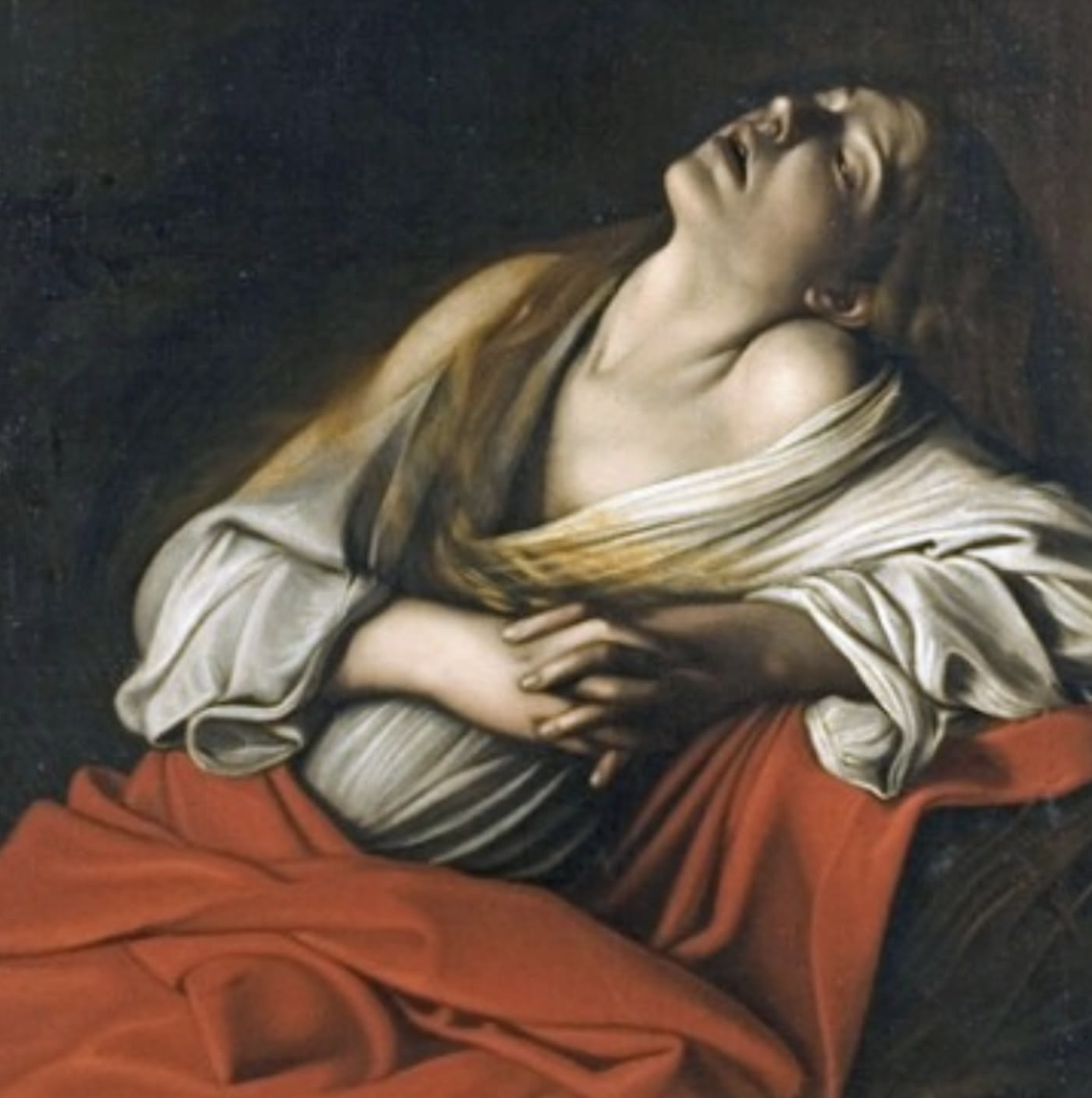
Caravaggio, Mary Magdalen in Ecstasy, 1606
God becomes pregnant with creation. God ejaculates into the water, so that life can appear. God’s dead body bears cosmic children. Ancestral gods impregnate rivers and waters with song and story. From the Womb of the World comes God, yet the Womb always awaits God. In the beginning was the Word, and the Word was with God, and the Word was God.
Sometimes, waiting is not altogether unforgiving. Here, the identification of divine force with the creativity of love brings one face-to-face with a God who is not a fixed entity, but rather a relational one. Here is a being that generates coherent form in the encounter of the moving and the still, of seed, ground and air – even of matter and meaning itself, made tangible by the energy that makes of one the other. In other words, it is what happens when out of nothingness comes something, if only we can allow the possibility of that nothingness being as full as possible as it lies there in waiting: waiting for love to create density, for time to set cosmic movements in motion, for the completion of a sentence that awaits being spoken.
Back in the Middle Ages, the loving and pleading Soul of the mystic is a simultaneously intellectual, carnal, and spiritual quest; a search for unity, for satiation, for dissolution, for fullness, for love – but also, and perhaps most fundamentally, for relation, for sense, for meaning. To Mechthild of Magdeburg, the Soul speaks thus:
“She says:
I cannot dance, Lord, unless you lead me
If you want me to leap with abandon,
You must intone the song.
Then I shall leap into love,
From love into knowledge,
From knowledge into enjoyment,
And from enjoyment beyond all human sensations.
There I want to remain, yet want to circle higher still.”
Far from establishing clear distinctions between the carnal and the soulful, or between either and the realm of meaning, knowledge or sense, the Soul of Mechthild puts all of these in relation spatially, as steps within a peculiarly circular and infinite quest, all set in motion by ‘song’; a quest that passes between ecstatic abandon and ‘knowledge’, dissolution and structure.
Think of the flower in a garden, cited by Emanuele Coccia in ‘Interspecific Sex’, opening its sexual organs up to the world so that another species may impregnate it:
“The sexual act… requires precisely to go through the world: sexuality is the most mundane and cosmic act. The encounter with the other is always necessarily a union with the world in its diversity of forms, statutes, substances: insects, wind, water, and animals of different sorts.”
This mystic’s soul, as an allegory of questful expectation, both drives towards coherence and waits to receive it, presents the possibility of sensing into the ecosystemic aspects of devotion, and the devotional aspects of ecosystems, yet again. This time, it invites us to tend to the planetary by paying particular attention to the relationship with and between things, to the semiotic relationships – following Eduardo Kohn’s suggestion that morphogenesis is semiotic in character – that make and unmake the more-than-human world, where every temporary being is at the same time an accumulation of constitutive materials, and a relationship between those materials in such a way that they create structure, and in creating structure, create meaning. ‘The twelfth nameless hour is like Love in her highest nature’, writes Hadewijch,
Now Love first breaks out of herself; and she works by herself. and always sinks back into herself, for she finds all satisfaction in her own nature. So she is self-sufficient. Were no one to love Love, Love’s name would give her enough lovableness in her own splendid nature. Her name is her being within herself; her name is her work outside herself; her name is her crown above herself; and her name is her depths beneath herself.